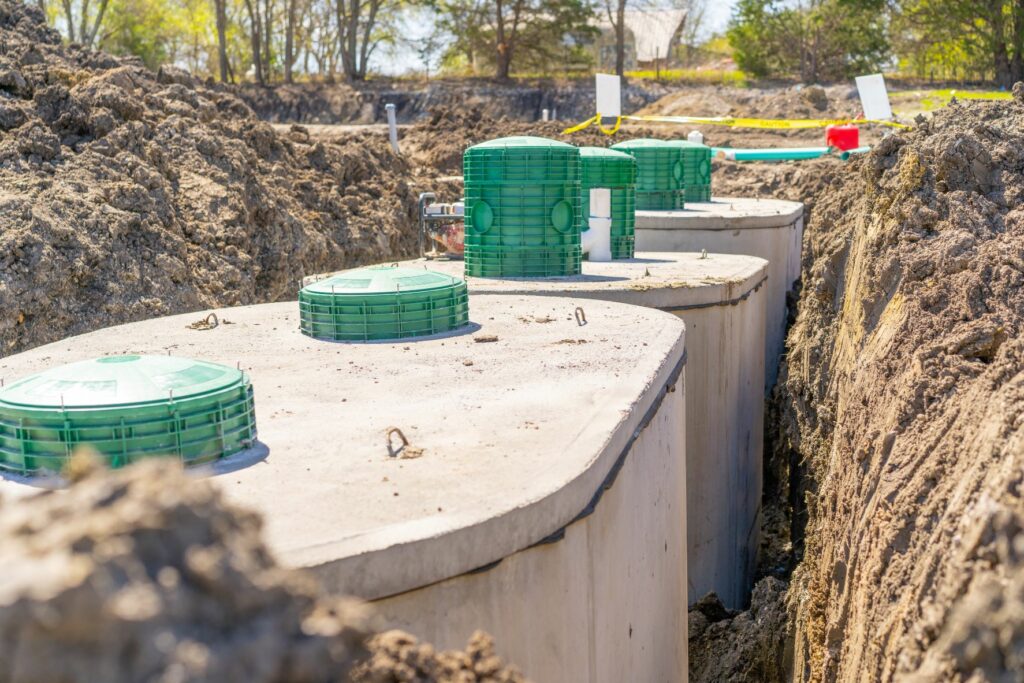
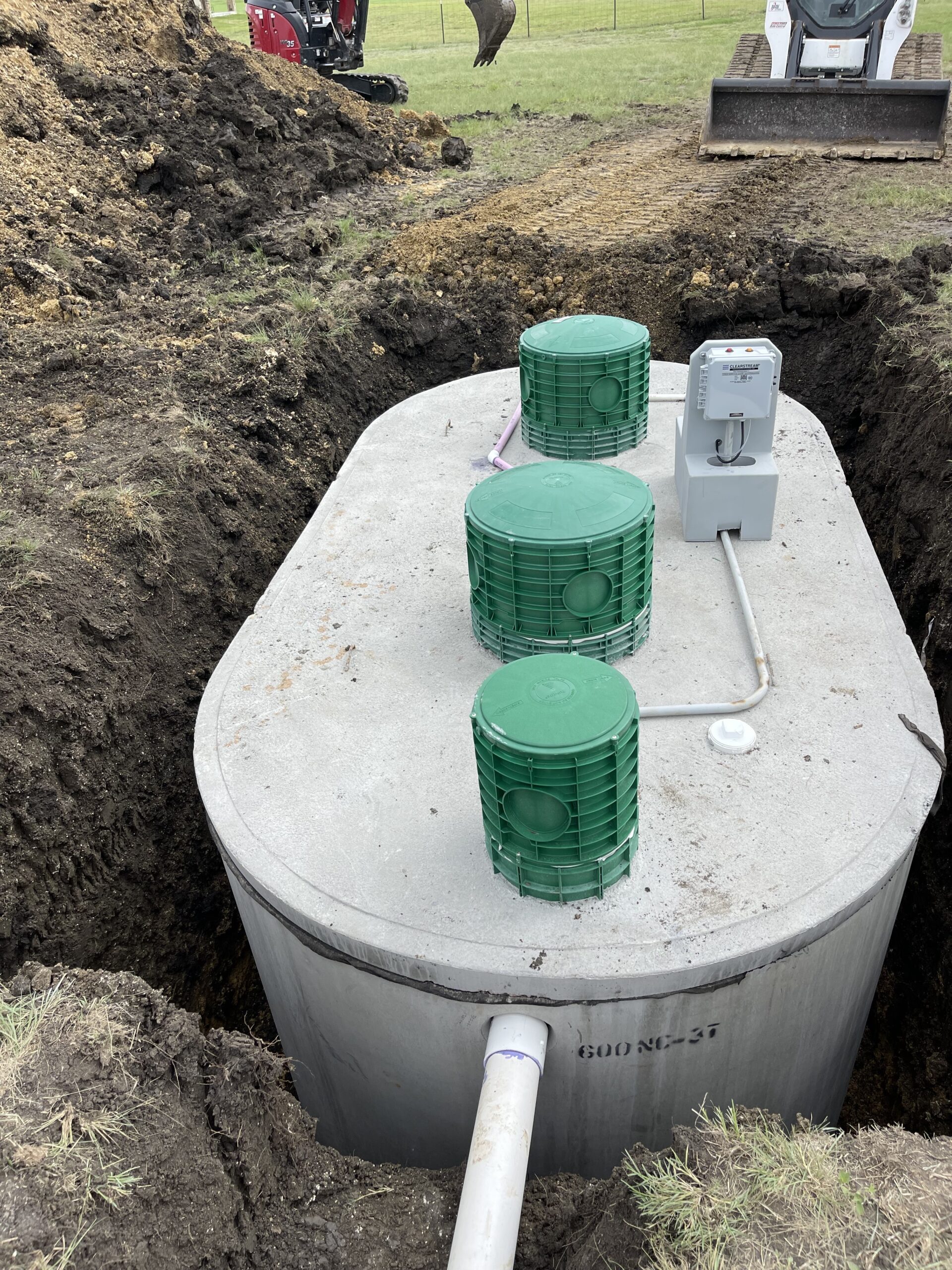
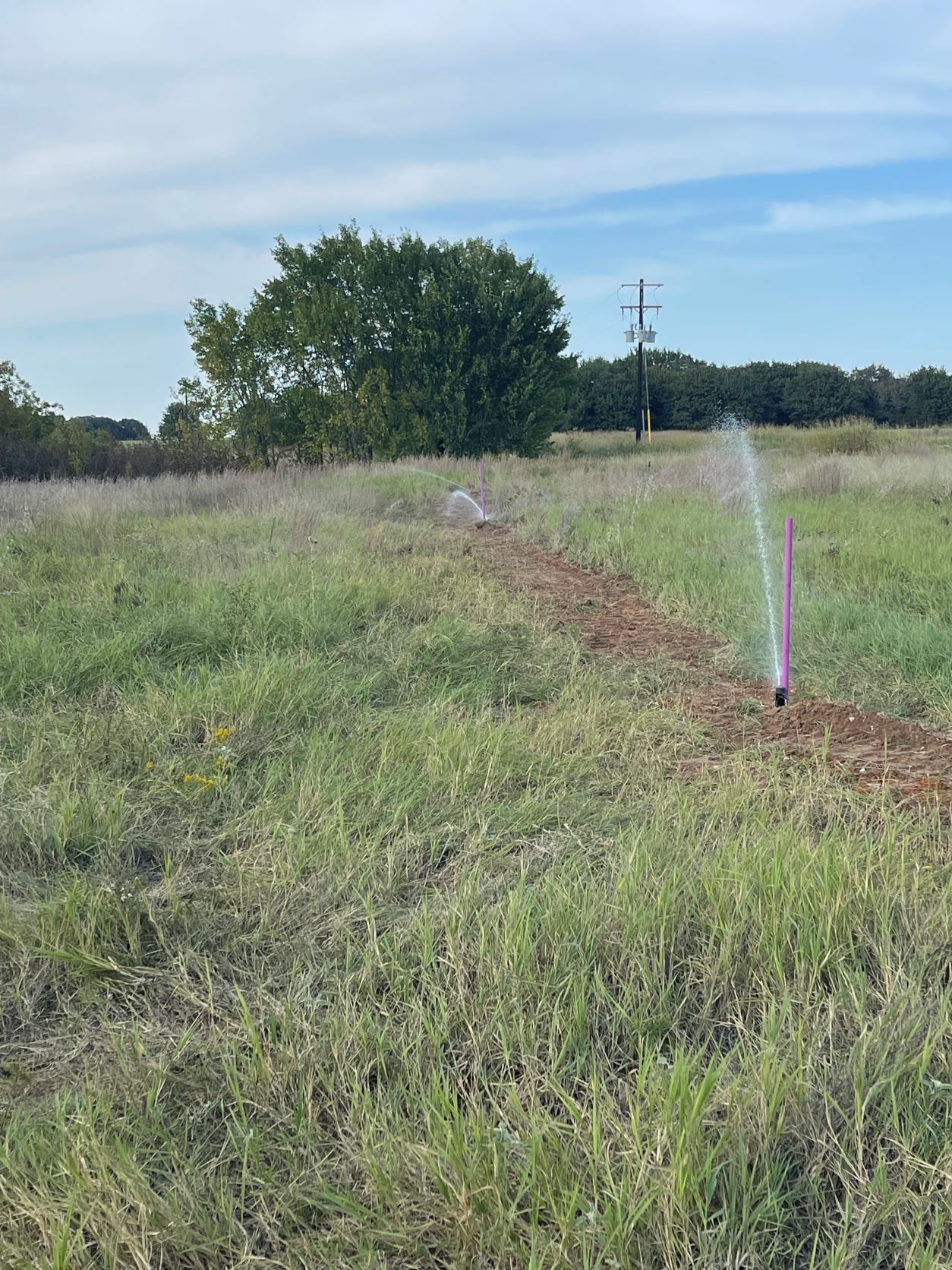
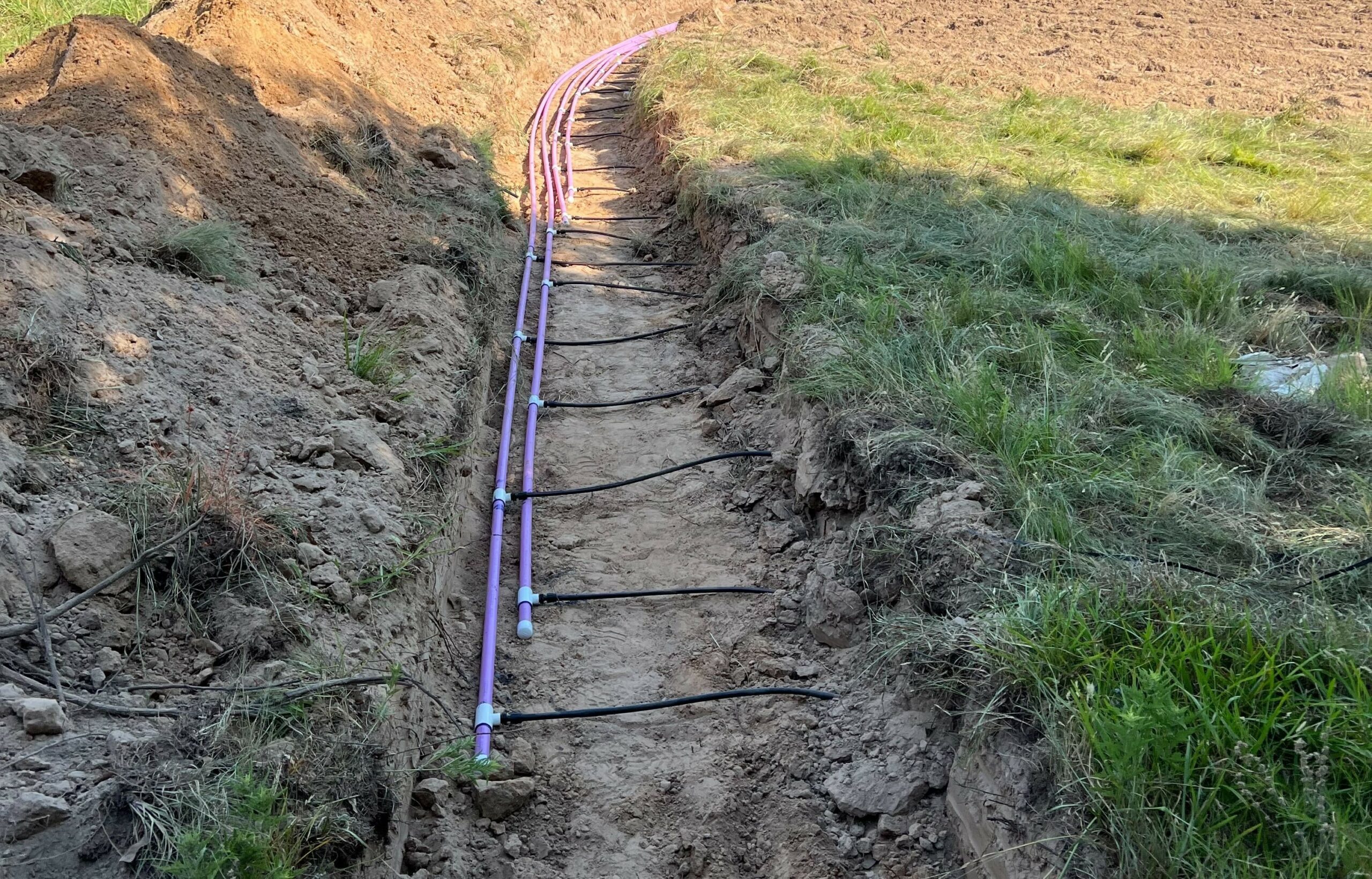
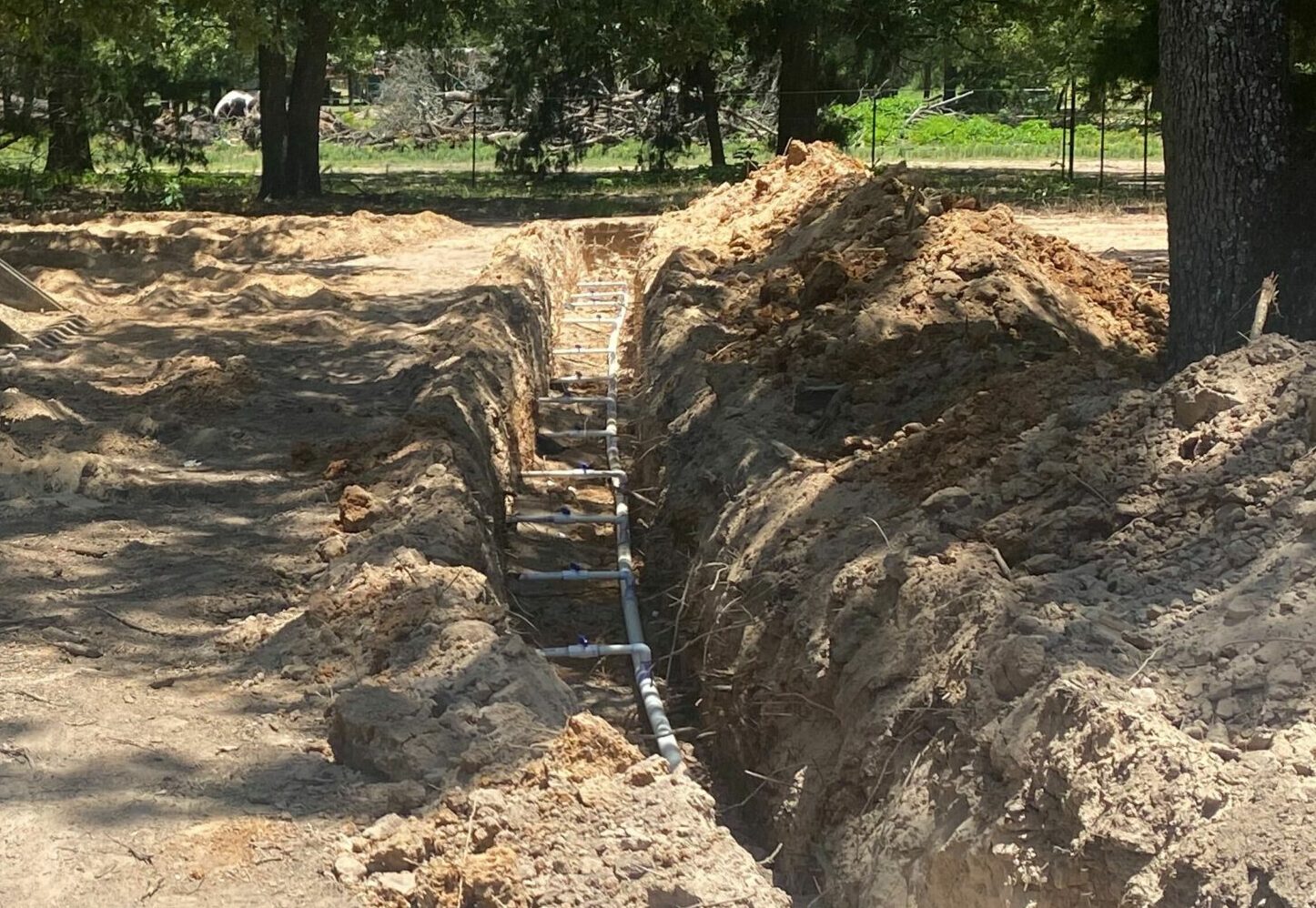
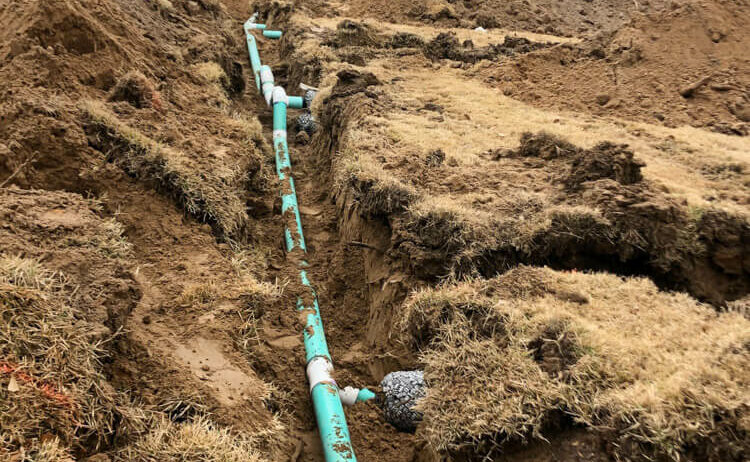
Typically, your soil type and lot conditions will determine what kind of septic system you are required to install. Most of our installs are Aerobic Treatment Systems (ATS) with spray field dispersal or a drip field dispersal. Each has their advantages, and we’re here to advise you on your options, design your system, and ensure you have a fully functional, high-quality system that is right for you.
Of course, keep in mind that your system will need to be approved and inspected by local authorities, with a design prepared by a qualified professional as required for the selected system. We will be happy to analyze your lot and recommend a system.
This miniature sewage treatment plant is the most common septic we install. After it treats the sewage through aerobic aeration, the water is sprayed above ground with sprinklers. While this type of system requires ongoing maintenance, the disposal method still needs an approved design suited to your soil and site conditions. It is also an eco-friendly way to have a green yard all summer long.
Aerobic Drip System
The Aerobic Drip System is also a miniature sewage treatment plant. However, it disposes of all the treated sewage underground instead of with sprinklers. This system is often used around lakes as well as on small properties.
Low-Pressure Dosing (LPD) Septic System
A low-pressure dosing (LPD) system pumps septic-tank effluent into underground distribution pipes. Suitability depends on a site evaluation and an approved professional design. The tank, pump, and disposal area still need routine care, including periodic pumping and component checks. Confirm inspection and maintenance requirements with your local permitting authority.
Conventional Drain Field System
A conventional drain field disperses septic-tank effluent underground. Suitable soil, available space, and site conditions determine whether this option can be approved. A gravity-fed system may operate without electricity, but it still needs routine care and periodic septic tank pumping.